


GitLab has released an urgent set of security updates addressing a critical authentication bypass and several denial‑of‑service (DoS) vulnerabilities that could disrupt development pipelines and expose sensitive assets. For Malta’s growing digital ecosystem—spanning government, fintech, iGaming, aviation, and software development—these vulnerabilities highlight the increasing pressure to maintain strong patching practices, especially as the EU Cyber Resilience Act (CRA) approaches enforcement.
Critical 2FA Bypass (CVE‑2026‑0723): A Direct Threat to Developer Identity Security
The most severe issue patched by GitLab affects both Community Edition (CE) and Enterprise Edition (EE). The flaw stems from an unchecked return value in GitLab’s authentication logic, allowing an attacker with knowledge of a user’s credential identifier to forge device responses and bypass two‑factor authentication (2FA).
While the exploit requires partial insider knowledge, Maltese and European security teams know that such identifiers can leak through:
- Previous data breaches
- Misconfigured logging systems
- Third‑party integrations
- Insider threats
Given that GitLab often stores source code, CI/CD secrets, deployment keys, and proprietary IP, even a partial 2FA bypass represents a significant risk.
High‑Severity DoS Vulnerabilities Expand the Attack Surface
GitLab also patched two additional high‑severity DoS vulnerabilities:
- CVE‑2025‑13927 — triggered by malformed authentication data
- CVE‑2025‑13928 — caused by improper authorization validation in specific API endpoints
Attackers could exploit these flaws to overwhelm GitLab instances, potentially halting:
- CI/CD pipelines
- Production deployments
- Security automation
- Developer workflows
Two medium‑severity DoS issues were also addressed, involving malformed Wiki documents and repeated malformed SSH authentication attempts. While rated lower, they remain exploitable—especially on publicly exposed or poorly monitored instances.
Immediate Patching Strongly Recommended
GitLab has released patched versions:
- 18.8.2
- 18.7.2
- 18.6.4
Self‑managed administrators are urged to update immediately.
The urgency is reinforced by the platform’s global exposure:
- Shadowserver reports ~6,000 CE instances publicly reachable
- Shodan identifies over 45,000 devices with a GitLab fingerprint
Not all are vulnerable, but the scale highlights the potential impact if attackers automate exploitation.
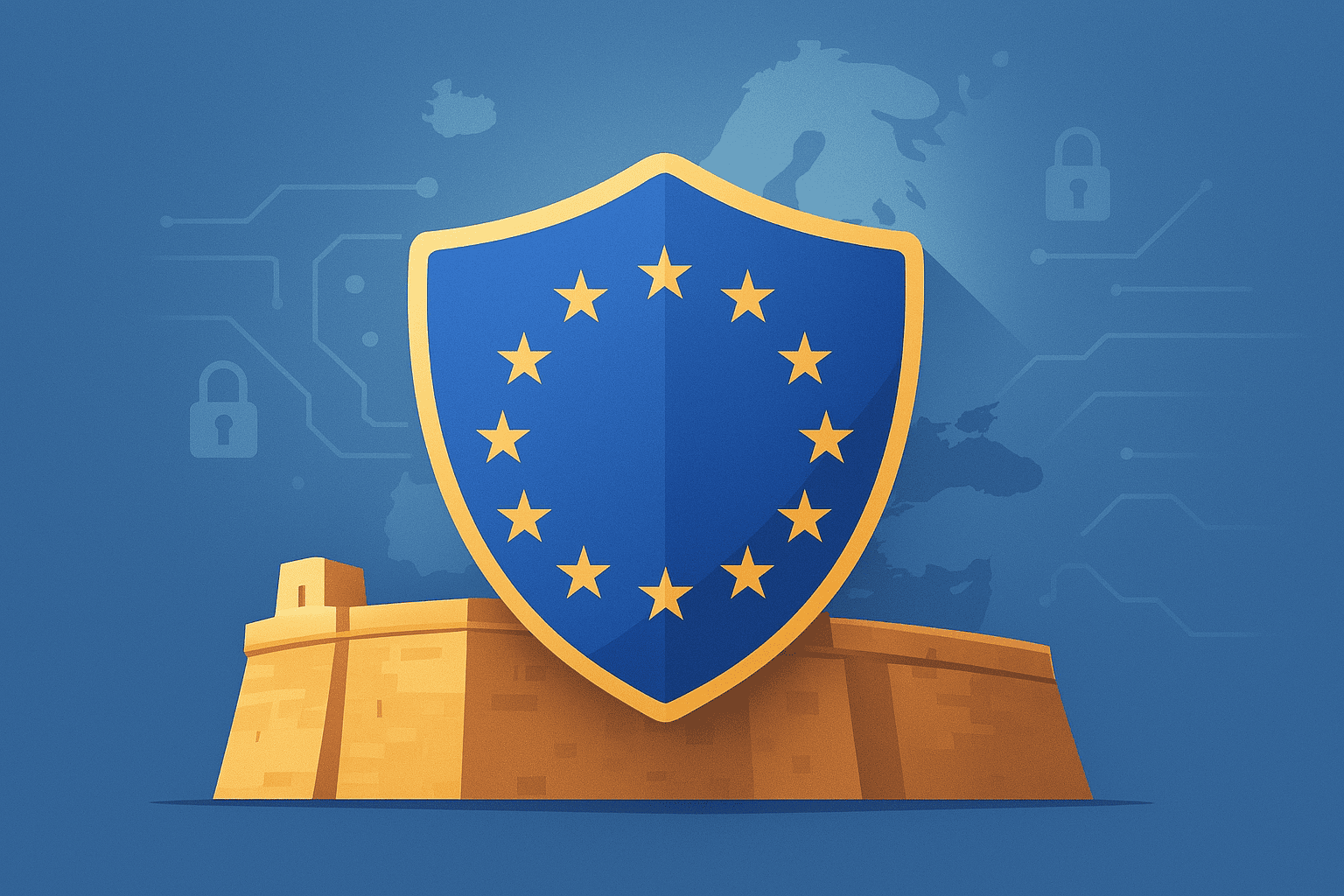
Why This Matters for Malta and the EU: The CRA Is Coming
The EU Cyber Resilience Act (CRA) will soon introduce mandatory security, patching, and vulnerability‑management obligations for software producers and distributors operating in the European market.
GitLab’s latest vulnerabilities illustrate exactly why the CRA exists:
- Unpatched systems create systemic risk
- Development tools are high‑value targets
- Supply‑chain security depends on rapid patching
- Organisations must maintain continuous vulnerability monitoring
For Maltese businesses, public sector entities, and software vendors, this is a timely reminder that security‑by‑design and security‑by‑maintenance are becoming legal requirements, not optional best practices.
For a clear, community‑driven breakdown of what the CRA means in practice, the ORCWG CRA FAQ is an excellent resource:
👉 https://cra.orcwg.org/
A High‑Value Target Trusted by Global Enterprises
GitLab powers development for more than 30 million registered users and over half of the Fortune 100, including major players in finance, aerospace, telecommunications, and defence.
This makes GitLab an attractive target. A successful exploit—even against a small percentage of instances—could expose:
- Source code
- Intellectual property
- Deployment credentials
- Sensitive operational data
The ripple effects across supply chains could be substantial.
Conclusion: Patch Now, Strengthen DevSecOps, and Prepare for CRA Compliance
GitLab’s rapid response demonstrates strong vendor maturity, but the responsibility is shared. Organisations in Malta and across Europe should:
- Apply the latest GitLab patches immediately
- Reduce public exposure of DevOps platforms
- Enforce least‑privilege access
- Monitor authentication logs for anomalies
- Strengthen CI/CD security controls
- Prepare for CRA‑aligned vulnerability management obligations
As development platforms become more interconnected and powerful, the margin for error narrows. These vulnerabilities serve as a reminder that even security‑focused tools require continuous vigilance.
For Maltese organisations preparing for the CRA, the ORCWG FAQ is a valuable starting point:
👉 https://cra.orcwg.org/